
Choosing the Right Preservation Format: Color, Aging, and whether to Ship your Flowers
Written by Ana Constantinescu, owner, artist and floral preservationist at Bloom and Make
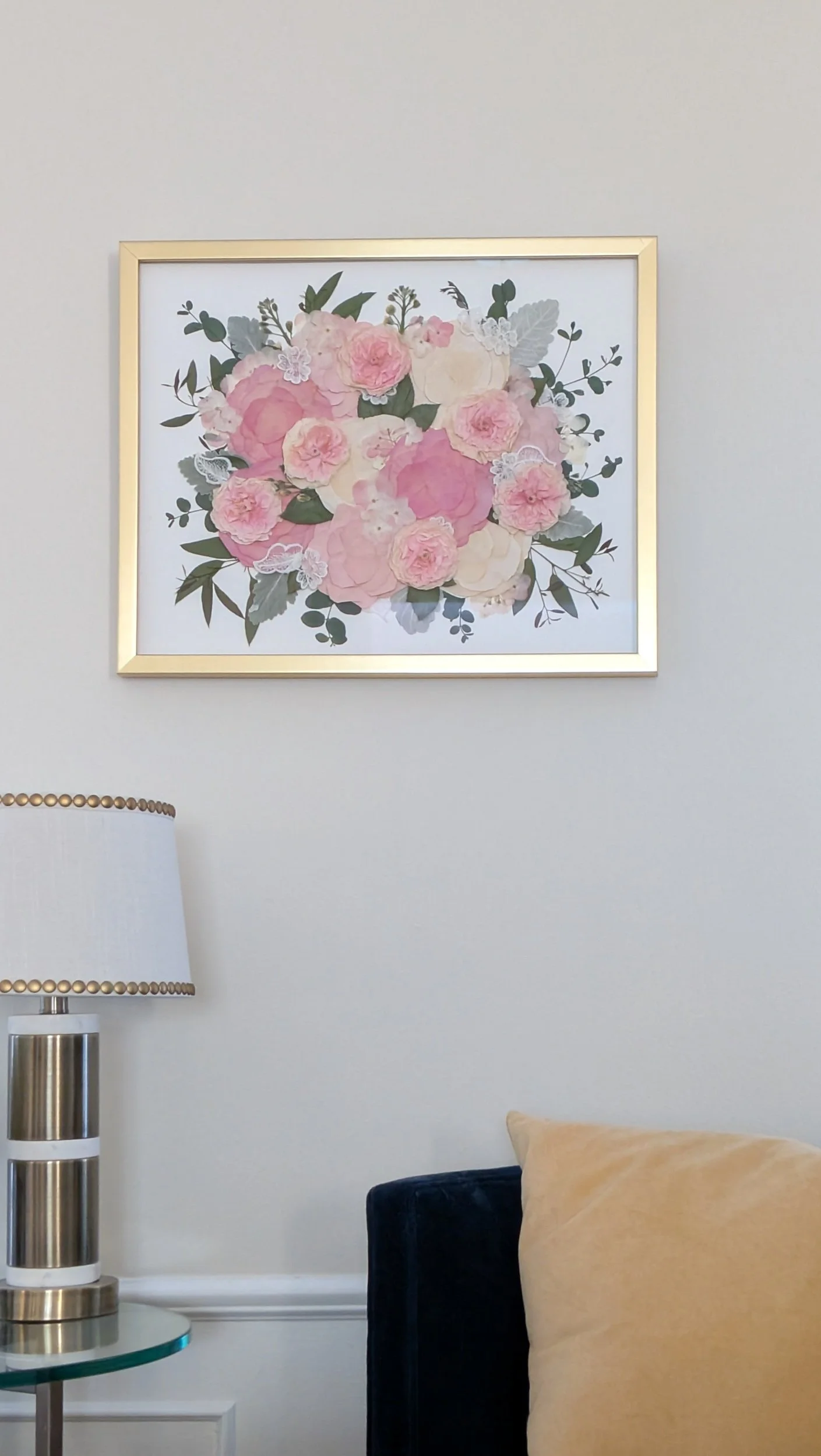
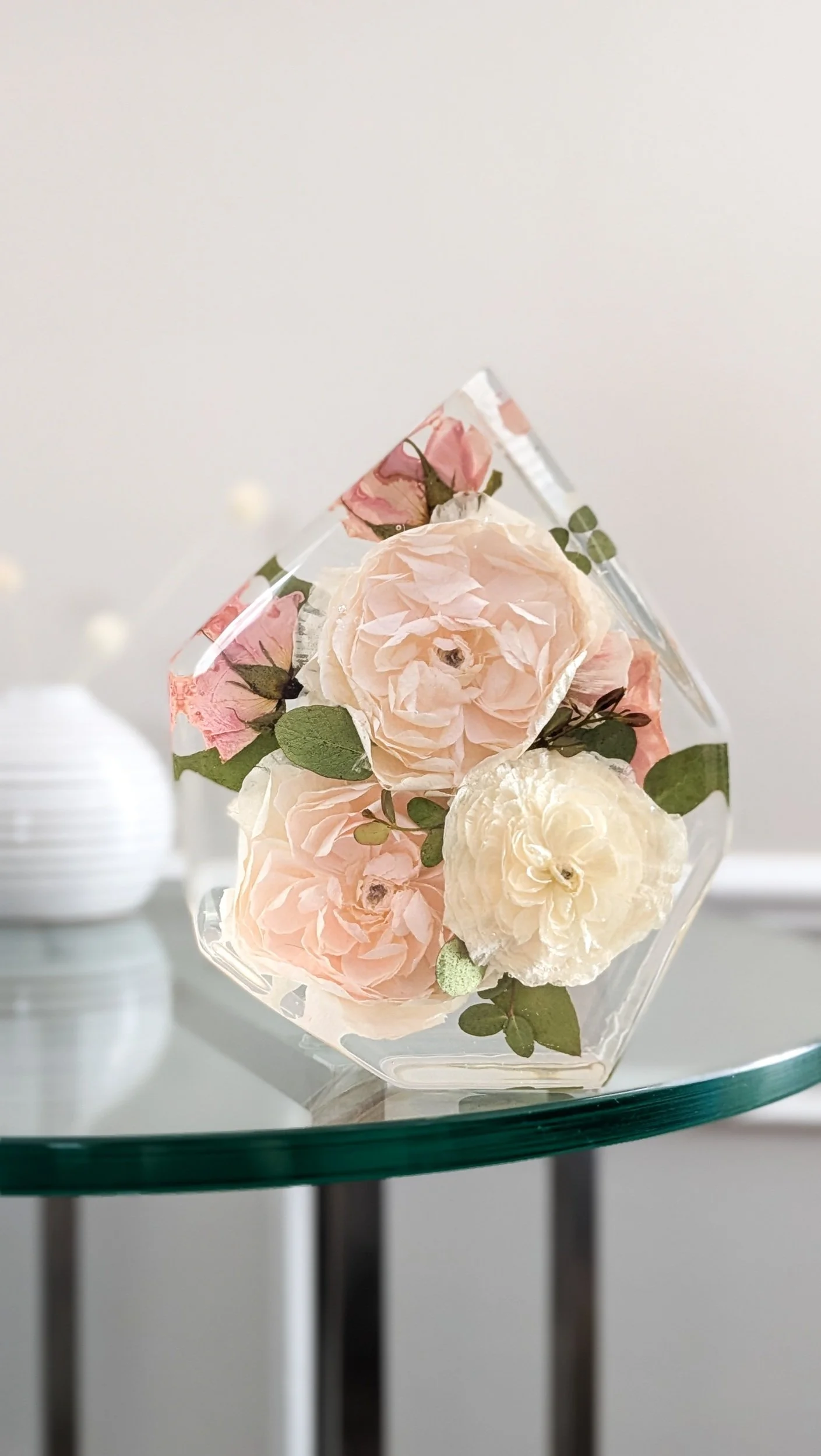
You've done some research on bouquet preservation options. Maybe you've already compared pressed frames, resin blocks, and shadow boxes (I wrote a full breakdown of every format and what each one costs), or maybe you've been browsing portfolios and getting quotes. Either way, you're past the "what exists" stage and into the harder question: which option is actually right for me?
How to decide between formats
A few questions worth sitting with before you commit:
Where will this actually live? Wall space, shelf space, and daily use lead to different formats. A couple in a small apartment with limited wall space has different needs than someone building a dedicated gallery wall. If you move frequently or rent, consider how portable your choice needs to be.
How do you feel about visible aging? Resin yellows. Functional pieces scratch. If you want something that looks the same in fifteen years, pressed frames with archival materials are the safer long-term investment. If you appreciate objects that develop character over time, resin can be genuinely beautiful as it ages. There’s no wrong answer, as long as you make it consciously.
Are you preserving for one household or several? Many couples don’t realize until after the wedding that they wish they’d split the bouquet: a pressed frame for themselves, jewelry for mothers, a small ornament for a grandmother. If you want to go this route, plan it before you ship your flowers. It’s much harder to add on later.
Budget context helps frame the decision too. The average wedding floral budget runs $2,200 to $3,500. Preservation at $700 to $1,500 is roughly 30 to 40% of what you already spent. For that investment, something with a one-week lifespan becomes art you’ll keep for decades.
Do your flowers need color correction?
Many popular wedding flowers change color dramatically during the preservation process. Toffee roses can turn purple. White flowers often brown. Certain yellows and oranges fade almost completely. Color correction is the step where a skilled preservation artist applies gentle restoration after pressing or drying, bringing flowers closer to their original appearance and helping them hold that look over time.
Without it, even pieces framed with museum-grade materials can show visible color loss within a year or two, depending on the flower varieties. Not every artist handles this the same way: some include color correction in their pricing, others charge extra for it, and some don’t offer it at all. It’s worth asking before you commit, because it directly affects how your piece will look five or ten years from now.
Shipping your flowers vs. finding someone local
Fresh flowers preserve best within 1-3 days of your wedding. This means how your flowers get to your preservation artist matters more than most people realize.
The interior of a shipping box can reach 100 degrees in summer and drop below freezing in winter. Both extremes will damage most flowers. White and ivory florals are especially vulnerable: They bruise and brown easily, and that damage shows up in the final piece regardless of how carefully they were packed. This is why most studios require next-day or second-day air shipping, which adds $100 to $200 to your total cost. Most carriers don’t ship on Sundays, so Monday through Wednesday is the practical window to get flowers moving safely.
Packaging matters too. Flowers should be cushioned with paper only (never plastic or packing peanuts, which trap moisture), with stems wrapped in wet paper towels inside a sealed bag, packed snugly enough that nothing shifts in transit.
There are talented artists in every major metro area, so finding someone within driving distance eliminates both the shipping gamble and the cost. For couples with predominantly white arrangements, fragile flower varieties like dahlias or poppies, or weddings in peak summer or winter, local is worth prioritizing. If no local artist offers the format you want, or you’ve found someone whose work you love enough to manage the logistics, shipping can work.
If shipping feels like too much of a gamble and professional preservation isn’t in your budget, there are other ways to give your flowers a second life. I covered a few of my favorites in this guide to repurposing your wedding flowers.
A final note
The right preservation format is the one that fits how you actually live, not how you imagine you’ll display something. If you’re genuinely unsure, ask the artist before you commit. A good one will give you an honest answer about what suits your flowers, your home, and your expectations for how the piece ages over time.